Does AI use your drinking water?
Type “does AI use drinking water” into Google and one number keeps coming back: 57%. It turns up on a university extension page, in a water operators’ newsletter, and in the forum threads that argue about all this. It traces to a real paper in a peer-reviewed journal.
It also doesn’t say what the pages quoting it think it says.
The short answer to the question is yes, often. Plenty of data centers are plumbed straight into the municipal water main, which means the water cooling them is the same treated drinking water that comes out of a kitchen tap. What nobody can tell you is how many.
The essentials
- Plenty of data centers really are plumbed into the same treated water that reaches kitchen taps. That part holds up.
- The famous 57% describes one company, in one year. The two most-quoted pages repeating it don’t agree on whether it counts buildings or gallons, and neither reading matches the paper.
- That same paper’s actual headline is that fewer than a third of data center operators measure their water use at all.
Why do data centers need water in the first place?
A data center is a warehouse full of computers, and computers turn electricity into heat. Enough of them in one building will cook themselves without help, so the heat has to go somewhere.
The cheapest way to move it is to evaporate water. Turning liquid water into vapor soaks up a lot of heat, and a cooling tower is a machine built around that one fact. Warm water trickles down through it while air blows across. Part of the water leaves as vapor, and the heat rides out with it. What’s left is cooler than what went in.
Not every data center works this way. Somewhere between a tenth and a quarter of them cool with air or refrigerants instead and use little or no water, and newer designs are pushing that share up. But evaporation is still the common case, and it’s the case the arguments are about.
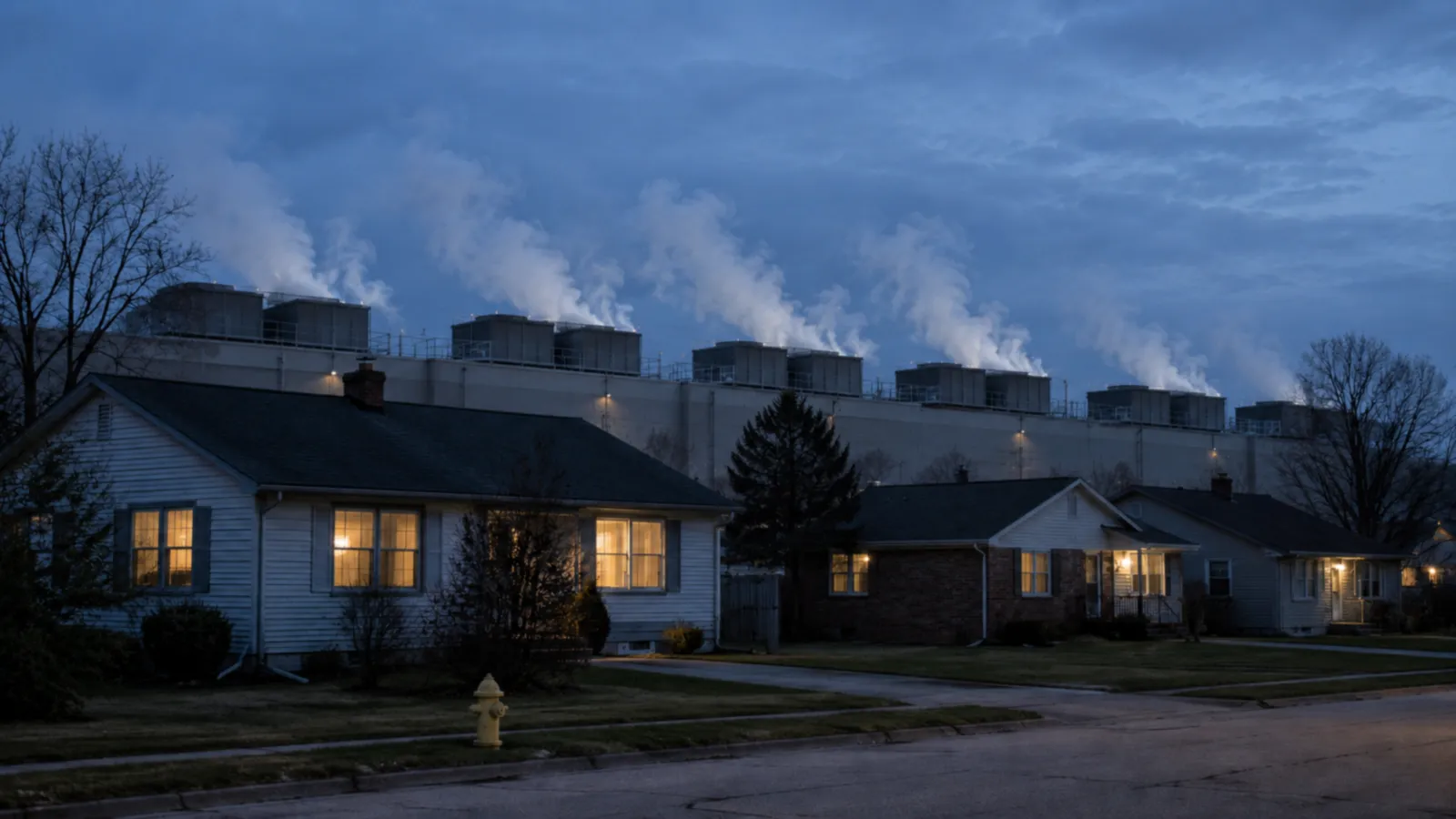
The catch is in the phrase “part of the water leaves.” In a typical evaporative system, something like 70 to 80 percent of the water goes up as vapor. The rest is drained off as wastewater and sent for treatment, which means it stays in the system and can be used again. The evaporated share is the part that doesn’t come back to the reservoir that supplied it.
Do data centers really run on drinking water?
Often, yes. A University of Georgia extension report puts it plainly: a vast majority of data centers are simply hooked up to the local water mains, which means their cooling water is treated municipal water, the same grade piped to houses.
There’s no villain in that decision. The main is already there, the water in it is already clean, and clean water is what a cooling tower wants. Minerals and grit build up inside the equipment and have to be flushed out, so starting with treated water means less scaling and fewer shutdowns. Building a separate supply of lower-grade water costs money that municipal water doesn’t.
That’s changing, though not everywhere at once. Some operators now run on reclaimed water, meaning treated sewage effluent that was never destined for a tap. Google says it uses reclaimed or other non-potable water at more than a quarter of its data center campuses, and Amazon began cooling with treated wastewater at 20 sites in 2023. Those are company disclosures rather than independent audits, but they’re a real move off drinking water.
So the instinct behind the question is sound. The way the number gets attached to it is where things go wrong.
Where does the 57% figure actually come from?
From Data centre water consumption, a paper by David Mytton published in npj Clean Water on 15 February 2021. Here is the sentence, where “potable” just means drinking-quality:
Consumption from potable water was 64% (2017), 65% (2018) and 57% (2019).
Three years, and 57% is the last of them. The chart those percentages come from is labeled “Water source by year for Digital Realty, a large global data centre operator.” One company. The abstract is careful about it too, saying data centers consume water for cooling, “in some cases 57% sourced from potable water.”
Now compare that with how the figure travels:
| Source | The claim | What it would mean |
|---|---|---|
| UGA extension report | “around 57% of all data centers use water from potable water supplies” | A headcount of buildings, worldwide |
| Florida water operators | “around 57% of data centers’ direct water use is from potable water supplies” | A share of all the water the industry uses |
| The paper itself | “Consumption from potable water was … 57% (2019)” | One operator’s own water mix, in one year |
Those first two are different claims. One counts facilities, the other counts gallons, and a number can’t be both. Both cite the same paper, and the paper is neither.
This isn’t really a story about two sloppy sentences. It’s about why the figure feels solid. It has been repeated in enough serious-looking places, and with enough different meanings, that it now reads like an industry statistic. It is one company’s disclosure from 2019. That’s the usual life cycle of the AI myths that keep going around, except this one started from good research rather than from nothing.
If you want the honest version of the answer, it’s this. Many data centers use drinking-quality water. On the paper’s own evidence, fewer than a third of operators measure their water use, so there is no reliable count of how many.
Why can’t they just use seawater?
Salt. The tower works by evaporating water, and when seawater evaporates the salt stays behind, piling up inside equipment that corrodes fast in a brine. Fresh water is the path of least resistance, so operators pay for it.
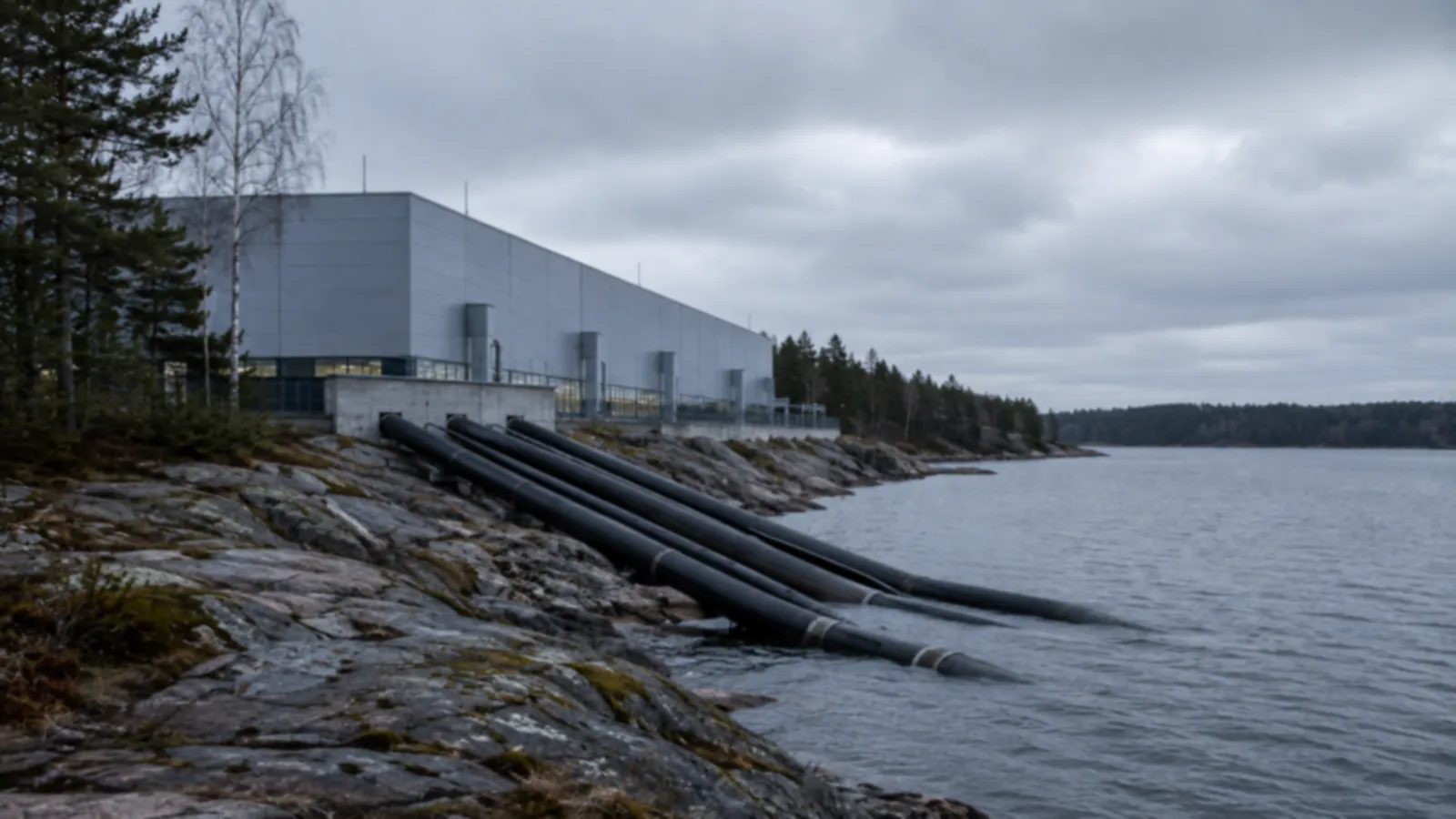
But “can’t” is too strong, and here’s the part the argument usually misses. Google’s data center in Hamina, Finland is cooled by the sea. The company’s own page for the site describes a cooling system using seawater from the Bay of Finland. Seawater cooling isn’t hypothetical.
It just needs a coastline, a purpose-built plant, and materials chosen to survive salt. None of that can be retrofitted onto an inland building that was cheaper to plug into the city main.
How much water is that, next to everything else?
The Mytton paper ran that comparison for the United States: data centers used about 1.7 billion liters a day against a national total of roughly 1,218 billion liters a day. That’s about 0.14%.
Three things about that figure.
It’s smaller than the headlines suggest, and it covers all data centers rather than AI specifically. Storing your photos and streaming a film draw on the same buildings.
It’s a national average, and water isn’t a national resource. It’s a local one. A slice that rounds to nothing across a country can be a serious fraction of one county’s supply, which is why the loudest fights about data center water are county-level fights.
And it’s older and rougher than it looks. That 1,218 billion liters is the US total for 2015, and it counts water withdrawn, meaning pumped out of a river or a well, while the data center number counts water consumed, meaning evaporated and not given back. Those are different measures. About 13% of the national figure isn’t even fresh water, it’s seawater and brackish water, mostly cooling power plants. So 0.14% is a rough bearing rather than a measurement, and the baseline predates the current building boom.
Which brings up something worth saying plainly, because this article is otherwise busy pointing at other people’s arithmetic. That comparison is hard to state correctly, and the two pages we’ve been quoting both stumble on it in opposite directions. The University of Georgia gets the sum right and the label wrong, calling the denominator “total U.S. water consumption” when the underlying USGS figure for 2015 is withdrawals. The Florida association gets the label right and the sum wrong, putting data centers at “roughly 0.3–0.4% of total U.S. daily water withdrawals” when the same numbers give 0.14%. We had the same slip in an earlier draft of this piece and caught it late.
For the separate argument about what a single ChatGPT message costs, we went through the published figures in how much water ChatGPT uses per message, where the estimates range from a fifteenth of a teaspoon to a 500 ml bottle per 10 to 50 replies depending on what’s being counted.
Why doesn’t anyone know the real number?
The most useful line in the Mytton paper isn’t a percentage at all. It’s the observation that there are “issues of transparency with less than a third of data centre operators measuring water consumption.”
Two separate things sit behind that. Some of the water is measured and kept quiet: the same University of Georgia report notes that facility-level figures are often treated as proprietary or sealed by nondisclosure agreements with local governments, and points to a 2026 Georgia law written to stop councils from signing those agreements. And a lot of it simply isn’t measured in the first place.
That’s how a 2019 disclosure from a single company ended up standing in for an entire industry. For a long stretch it was one of the few numbers anyone had published. Some operators have since started reporting: Google now publishes annual water use for each of its data center locations, which is more than most.
Until that reporting is normal, the good-faith answer to “does AI use my drinking water” is: quite possibly, in your area, and you can ask your local water utility rather than the internet. They know what they sold and to whom. The paper everyone is quoting doesn’t.
If it’s the wider picture you’re after, we’ve written about whether AI is safe to use and what actually happens to your data once you press send.
About the pictures: all three images in this article were generated with AI. They are illustrations, not photographs of anywhere real. The coastal one in particular is not Google’s Hamina site. It shows the idea of seawater cooling, not that building. In a piece about numbers being passed off as something they aren’t, it seemed only fair to say so.
Keep going: more calm answers to the questions people actually worry about, in AI safety.
Frequently asked questions
Is my tap water being used to cool AI?
In many places, the water a data center uses for cooling is the same treated municipal water that reaches houses, because the building is connected to the ordinary water main. That is a real and well-documented practice. What nobody can tell you reliably is what share of data centers worldwide do it, because most operators do not publish the figure.
Where does the 57% figure come from?
From a 2021 paper by David Mytton in npj Clean Water. The paper says consumption from potable water was 64% in 2017, 65% in 2018 and 57% in 2019, and the chart those numbers come from is labeled as the water sources of Digital Realty, a single data center operator. The abstract says 'in some cases 57%'. It was never presented as an industry-wide figure.
Why not cool data centers with seawater?
Because most cooling towers work by evaporating water, and evaporating seawater leaves the salt behind, where it builds up and corrodes the equipment. It is not impossible, though. Google's data center in Hamina, Finland is cooled with seawater from the Bay of Finland, so the design exists where the coast and the engineering line up.
Does the water disappear forever?
Not all of it. In a typical evaporative cooling system, roughly 70 to 80 percent of the water leaves as vapor and the rest is drained off as wastewater and sent for treatment, which means that part stays in the system and can be used again. The concern is more specific than loss: the evaporated share does not come back to the particular river, reservoir or aquifer that supplied it, and not necessarily to the same county.
Is AI a big share of national water use?
On the numbers in the 2021 npj Clean Water paper, US data centers used about 1.7 billion liters a day against a national total of roughly 1,218 billion liters a day, which works out to about 0.14%. Treat that as a rough bearing rather than a measurement. The national baseline is total US water withdrawals for 2015, so it predates the current building boom, and it measures something slightly different from the data center figure. It also covers all data centers rather than AI alone, and a share that looks tiny across a country can still be a large fraction of one county's supply.