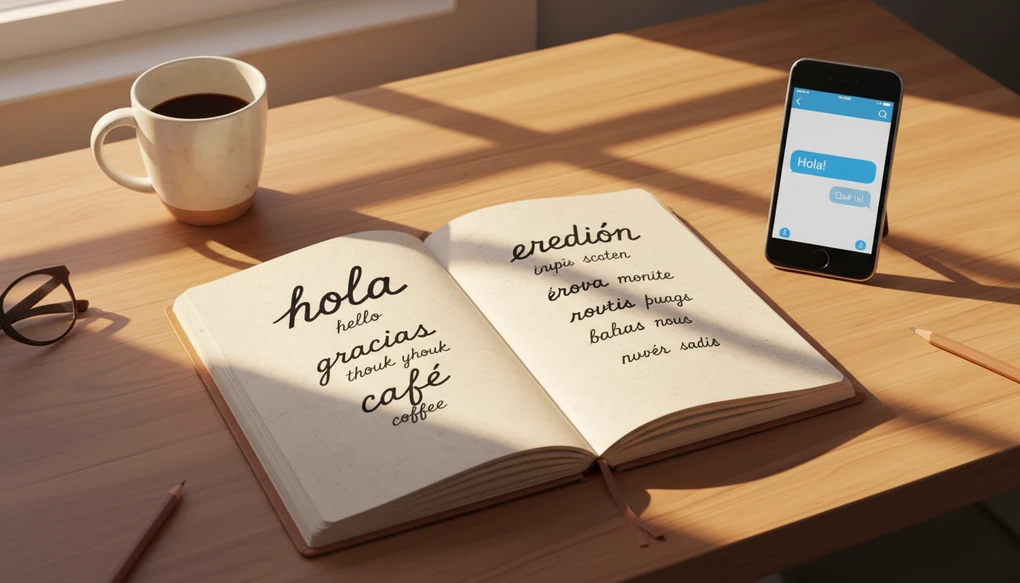
Can AI help you learn a new language? Here's how
Every language learner hits the same wall: you know some words, you’ve done some lessons, but there’s nobody around to practice with. Native speakers are intimidating, tutors cost money, and the app keeps showing you the same owl. This is exactly the gap an AI chatbot (a tool like ChatGPT or Google Gemini that you talk to in plain language) fills surprisingly well.
The essentials:
- AI is a patient, judgment-free conversation partner that adjusts to your level and corrects you as you go.
- It’s great at explaining why something is wrong — the thing apps rarely do.
- It can’t replace real listening and speaking practice, and it won’t keep you motivated. Use it alongside a course or app, not instead of one.
Can AI actually teach you a language?
It can teach you a lot. But “teach” is doing two different jobs in that question, and AI is only good at one of them. What it does well: explaining grammar in plain words, generating endless practice at exactly your level, translating, and holding text conversations that never run out of patience. What it doesn’t do: give you a structured path from zero, hear whether your accent is understandable, or notice that you’ve quietly stopped showing up.
Think of it as the world’s most available practice partner, not a teacher. A partner is exactly what most self-learners are missing.
How do you practice conversation with ChatGPT?
Give it a role and a level, then just talk. This is the single best language use for a chatbot, and it takes one message to set up:
“Let’s practice Spanish. I’m a beginner, maybe A2. Play a waiter in a restaurant in Madrid and take my order. Keep your replies short and simple. After each of my messages, correct my mistakes in English, then continue in Spanish.”
What comes back is a conversation you can’t fail at. Order the wrong verb tense and nobody laughs; the chatbot fixes it, tells you why, and the waiter is still waiting for your drink order. Done with restaurants? Switch to checking into a hotel, meeting a coworker, or talking about last night’s game. Any situation you might actually be in, you can rehearse first. Our language practice prompt builder asks for the language, the situation, and who the AI should play, then writes that opening message for you.
The correction habit matters more than the role-play. When a correction surprises you, ask about it: “Why is it ‘fui’ and not ‘era’ there?” Getting your specific confusion explained, at the moment you’re confused, is something a textbook can’t time for you.
You can do the same practice out loud. Both ChatGPT and Google Gemini include a free voice mode: tap the microphone icon and have the role-play conversation by speaking instead of typing. Free plans cap how much voice time you get, but it’s enough for a short daily session, and it’s the closest thing to a real conversation you can get without another human.
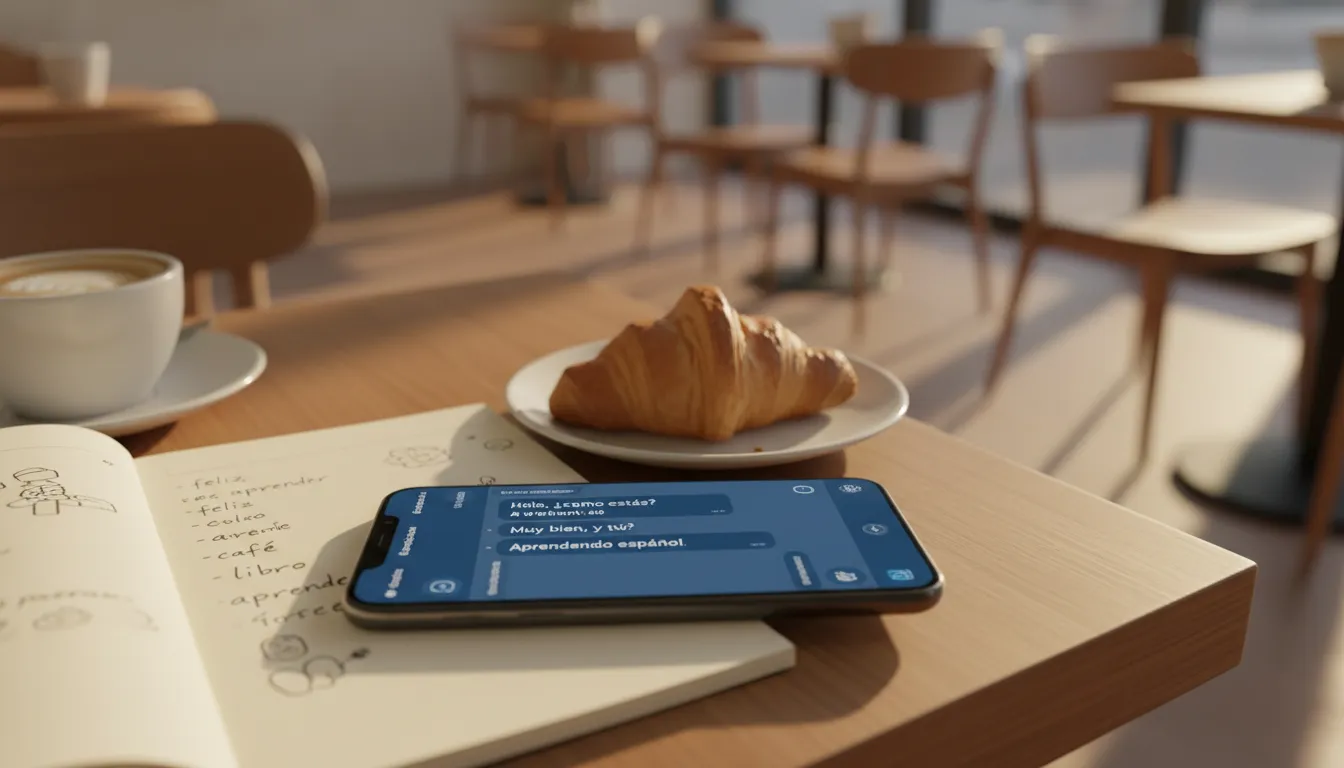
What else can AI do for language learning?
Beyond conversation, the other big win is getting material tailored to you:
- Grammar, explained your way. Ask “Explain German cases like I’m ten” or “Give me five more examples of this pattern, using food words.” If the first explanation doesn’t click, say so and get a different one. That loop — explain, fail, re-explain — is private tutoring behavior, free.
- Vocabulary that’s actually yours. Generic word lists teach you “pencil” and “aunt.” Instead: “I’m a nurse learning Portuguese. Give me the 30 words I’d need on a first hospital shift, with example sentences.” Words tied to your life stick better because you’ll actually use them.
- Reading at your level. Ask for a short story using only vocabulary you’ve listed, or paste a real article and ask it to simplify the language while keeping the story. Graded readers, generated on demand.
One pattern connects all three: you’re not consuming a course someone built for everyone. You’re describing your situation and getting material built for it. That’s the same skill as writing a clear prompt: context in, useful answer out.
What are the limits — and where can AI get it wrong?
Three honest ones.
Text chat can’t hear you. Pronunciation is half of speaking a language, and typing trains none of it. The free voice modes help, but their time is capped and they’re not a pronunciation coach. If your goal is talking to humans, you eventually need humans: a tutor, an exchange partner, or at minimum lots of listening to native audio.
It makes mistakes, confidently. Chatbots are right most of the time and wrong with the same confident tone, and as a learner you can’t always spot the difference. For common languages like Spanish or French, errors are rare at beginner level. For smaller languages, they’re common enough that you shouldn’t treat the AI as your only source. When something looks odd, check a dictionary or a verified course.
It won’t keep you going. No streaks, no reminders, no guilt-tripping owl. That sounds like freedom until week three. Motivation and structure are real features, and apps and classes provide them; a chatbot waits silently until you show up.
Should you use AI or a language app?
Both, for different jobs. This isn’t actually a versus question. An app like Duolingo or a structured course gives you a path: what to learn today, in what order, with a habit loop attached. A chatbot gives you what the path can’t: open conversation, answers to your specific questions, and practice material shaped to your life. A workable free routine: let the app set the daily structure, then spend ten minutes role-playing in a chatbot using whatever the app just taught you. The app plants the vocabulary; the conversation makes it usable.
Any of the big free chatbots handles everything here: ChatGPT is the one most people start with, and Google Gemini does the same jobs. Free plans limit how long you can chat in one stretch, but a daily practice session fits comfortably. It’s the same move that works for planning your week or other everyday tasks: describe your situation honestly and treat the first answer as a draft.
The bottom line
AI won’t make you fluent on its own. Nothing you can download will. But the biggest bottleneck for most self-learners was never information. It was having someone endlessly patient to practice with, and that problem is now solved, for free, in your pocket. Pick tonight’s scenario, set your level, and order that first coffee in the language you’re learning. Worst case, you conjugated a verb wrong in front of a computer program. It won’t tell anyone.
More ideas for putting AI to work in daily life: AI Everyday, or see how AI can save you time at work.
Frequently asked questions
Can AI teach you a language by itself?
Not really. AI is a strong practice partner: it explains grammar, drills vocabulary, and holds patient conversations at your level. But text chat does nothing for your pronunciation, voice time is capped on free plans, and it won't keep you accountable. It works best alongside a structured course or app, not instead of one.
How do you practice a language with ChatGPT?
Tell it your level, the language, and the situation you want to practice, and ask it to play the other role: a waiter, a hotel clerk, a new coworker. Ask it to correct your mistakes as you go and to keep its replies at your level. When a correction doesn't make sense, ask why; the explanations are where the real learning happens.
Is AI better than an app like Duolingo?
They do different jobs. An app gives you structure, streaks, and a path from day one; a chatbot gives you open-ended conversation and answers to your specific questions. Most learners get more from using both than from picking a winner.
Is practicing a language with AI free?
Yes, for everything in this guide. The free versions of ChatGPT and Google Gemini handle conversation practice, grammar explanations, and vocabulary drills. Free plans limit how long you can chat in one stretch, but a daily practice session fits comfortably.