What can't AI do? The skills that actually hold up
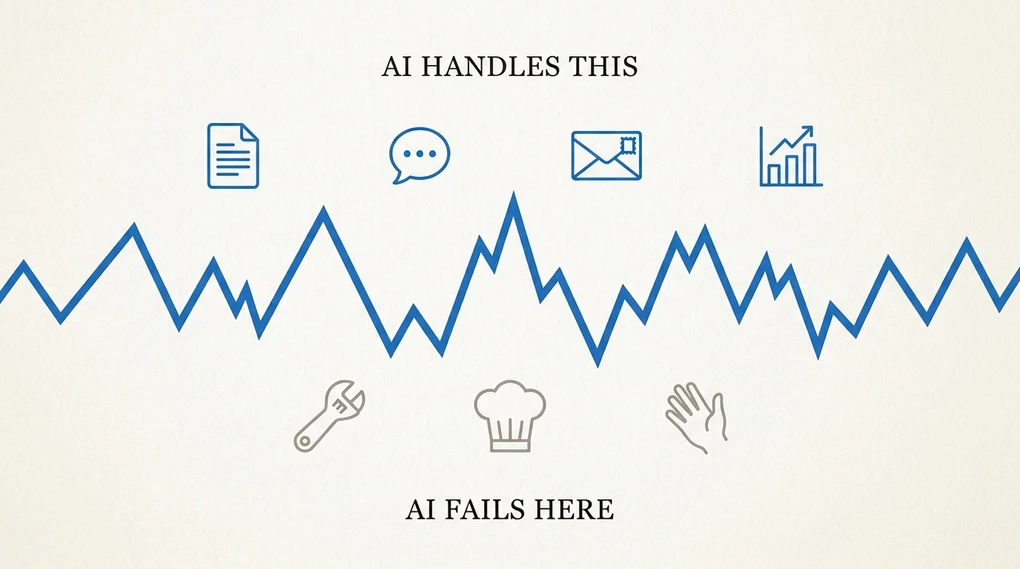
AI can do less than the confident lists claim, and the limits aren’t the ones they usually name. It writes, draws, and sounds caring, so creativity and empathy are shaky ground to plant a flag on. The limits that actually hold up are duller and more useful: AI can’t be in the room, can’t be held responsible, doesn’t know what was never written down, and has nothing riding on getting it right.
The essentials:
- The popular answer is the weakest part of the answer. Every “skills AI can’t replace” list names creativity, empathy, and communication, and AI already produces convincing versions of all three.
- The dangerous gap isn’t the tasks AI obviously fails. It’s the ones it fails while sounding sure. In one experiment, consultants using AI on a task it was bad at reached the right answer 19 percentage points less often than colleagues working without it.
- What holds up: physical presence, accountability, private context, and having something at stake.
- Some of these limits are engineering problems that may close. One of them isn’t a technical question at all.
What can’t AI do?
Start with the version that’s actually true: today’s AI can’t be somewhere, can’t be responsible, can’t know what nobody wrote down, and loses nothing by being wrong.
That’s a smaller answer than “machines will never understand the human heart,” and it’s worth more, because you can check it. A chatbot can’t walk into a house with a broken boiler. It can’t sign off on a decision and carry the consequences when the decision is wrong. It knows what it was trained on, plus whatever you hand it or connect it to, and that still leaves out almost everything about your team, your customers, and last Tuesday. And when it gets something badly wrong, nothing happens to it.
The reason so many articles reach for grander answers is that the plain ones are uncomfortable. They put the line in a place that includes a lot of work people are proud of.
Why is the usual list of “skills AI can’t replace” half wrong?
Because the two skills it names first, creativity and empathy, are the two AI imitates best.
Take creativity. AI generates images, stories, songs, and product ideas at a speed no person matches, and enough of it is now in circulation that institutions have had to write rules about it. The scientific publisher Springer Nature, for one, won’t publish AI-generated images or video at all while the copyright questions stay unsettled. You can argue it’s only recombining patterns from its training data rather than inventing. That argument has real force, and it also describes a lot of human creative work. If your claim to being irreplaceable rests on producing output nobody has seen before, that’s a weaker position than it was three years ago.
What AI doesn’t do is want anything. It has no taste it didn’t learn from us, and no reason to care whether the thing it made is any good. “AI can’t be creative” is a claim that keeps losing. “AI has no stake in what it makes” is one that holds.
Empathy goes the same way. A chatbot doesn’t feel anything, which is true and matters less than you’d think, because plenty of people find its responses genuinely comforting. The gap isn’t the warmth of the words. It’s that the chatbot doesn’t remember you unless someone built it to, takes on none of your risk, and won’t lose anything by getting you wrong. That’s the part that can’t be generated.
Both cases point the same way. The question isn’t whether AI can produce the output. It’s whether producing the output was ever the whole job.
What does AI get wrong while sounding certain?
Things that look, from the outside, exactly like the things it does brilliantly. This is the limit that costs people the most, and it’s the one the “skills AI can’t replace” lists leave out.
Researchers call it the jagged frontier: the edge of what AI can do is uneven and unpredictable, so two tasks that seem equally hard to a person can land on opposite sides of it. The name comes from a real-world experiment, run by researchers from Harvard, Wharton, MIT, and elsewhere with 758 consultants at the Boston Consulting Group (BCG). It went out as a working paper in 2023 and was published in the journal Organization Science in 2026. The figures below are the published ones. Peer review shrank some of them, so older articles quoting this study tend to run bigger numbers than the paper now supports.
The results split cleanly. On the 18 tasks inside the frontier, consultants using AI completed 12.2% more of them, worked about 25% faster, and had their answers graded more than 30% higher on quality. Then the researchers picked a task designed to sit just outside it, where the right answer needed information the AI would handle badly. Consultants working without AI got that one right about 84.5% of the time. The groups using AI scored 60% and 70.6%. That’s 19 percentage points worse, not 19% worse: nineteen points knocked off an 84.5% score.
Three of the authors were at BCG when the study ran, and BCG’s own consultants were the subjects. We’re citing it anyway, partly because the result everyone remembers is the one that makes AI look bad.
The tool didn’t announce it was out of its depth. It produced a confident, well-written, wrong answer, and trained professionals went along with it. Knowing where the edge is turns out to be its own skill, and it’s a strange one, because you can only build it by using the tool enough to develop a feel for where it starts making things up.
The cheapest way to find that edge yourself is to give AI a job you already know the answer to. Ask it about a topic you know cold, or a place you’ve lived, and watch where it starts filling gaps with things that sound right. It won’t warn you when it crosses over. It doesn’t know it has.
This isn’t a reason to avoid AI. The same study is one of the strongest pieces of evidence that AI helps a lot on the right tasks. It’s a reason to treat “it sounded right” as worth nothing, which is the same habit that keeps you safe with AI generally.
What skills can’t AI replace?
Four, and none of them are personality traits. One word first, because it’s about to do some work: a model is the trained software underneath a chatbot. ChatGPT is the app you type into; the model is the part that learned from all that text.
| What it means | Why AI can’t get there | |
|---|---|---|
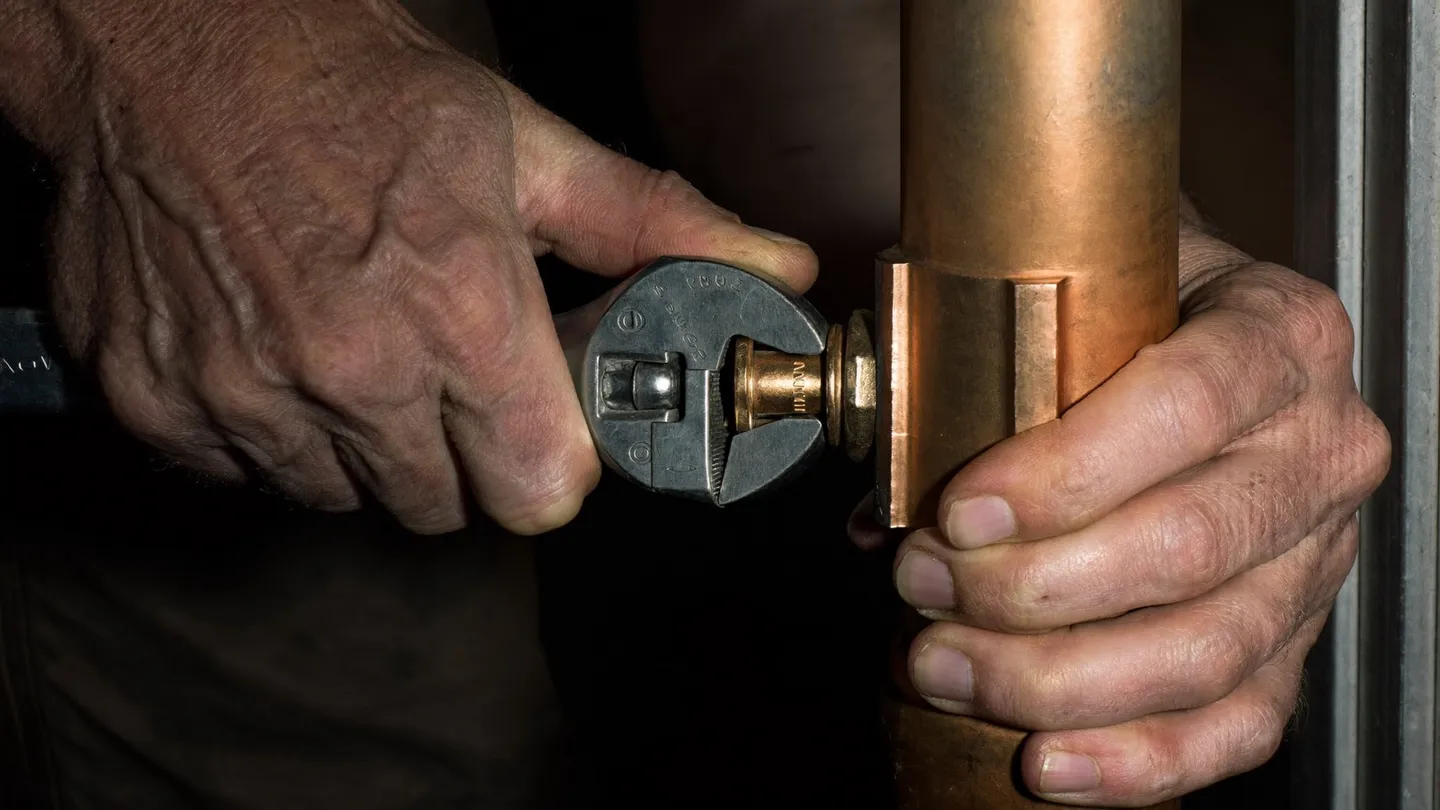
| Being in the room | Physical work in a place that won’t hold still: a burst pipe, a classroom, a kitchen at 8 p.m. | Software has no body. Robots that handle messy real-world spaces are a much harder and slower problem than chatbots |
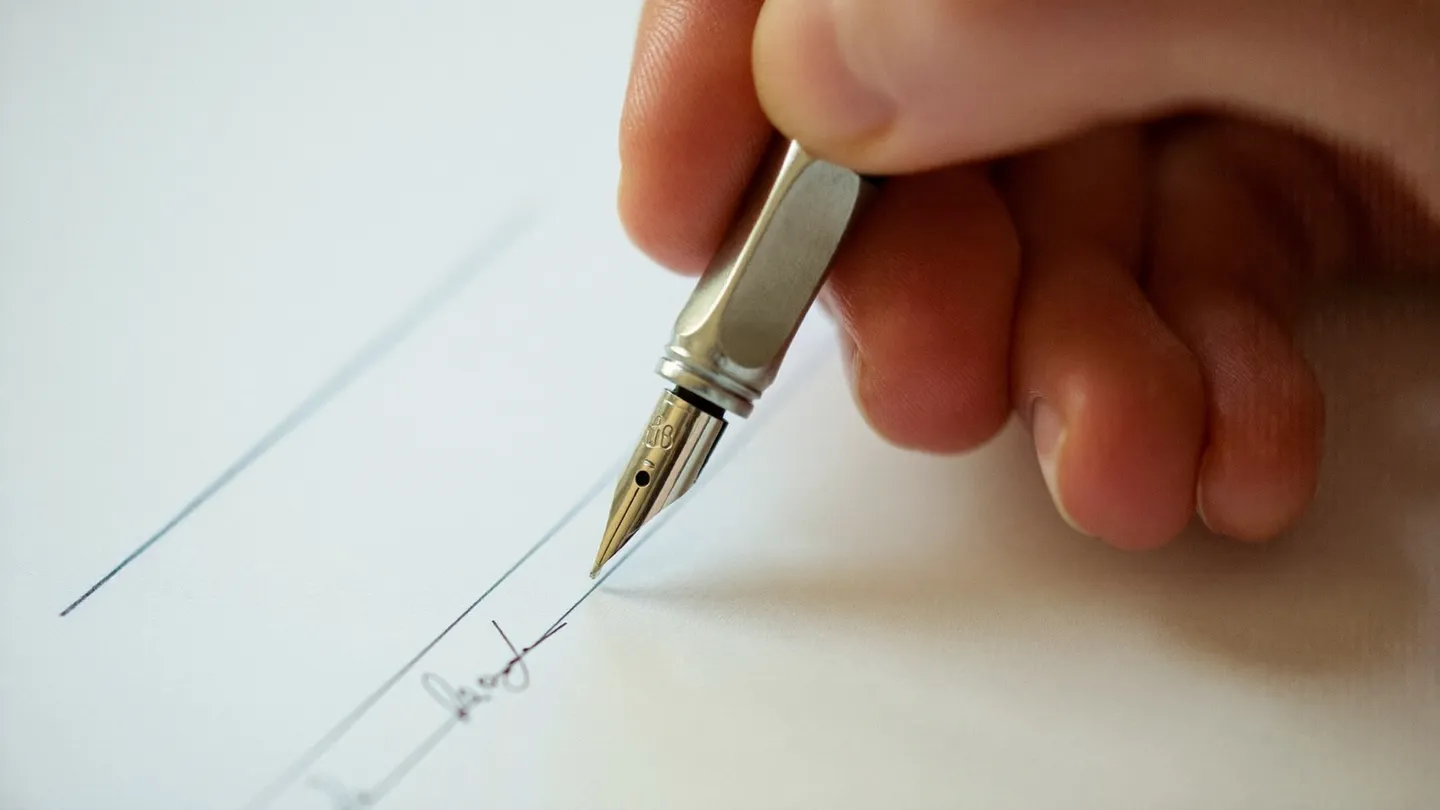
| Carrying responsibility | Someone signs it, owns it, and answers for it when it goes wrong | You can’t fire a chatbot, sue it, or take away its license. Accountability needs somebody who can lose something |
| Private context | Why the last project failed, which client is about to walk, what the mood in the meeting actually was | A model knows what it was trained on, plus whatever it’s been given access to. Most of what makes a decision right where you work was never written down at all |
| Having something at stake | Caring enough to notice the answer is off, and staying with the problem when it’s tedious | A model has no preference about being right. It produces the likeliest text and stops |
The first one has numbers behind it. When Anthropic looked at where AI is actually being used across the US workforce in March 2026, roughly a third of workers turned up in occupations the data barely touched. Kitchens, bars, pools, repair shops: work that needs a body in the room. The old story about robots coming for manual work first got it backwards. Software arrived at the desk long before it got near the toolbox, and the robot picture most of us carry around hides that.
The second one is the strangest, because it isn’t about capability at all. Even if a model gave better medical or legal answers than any human, somebody would still need to be licensed, insured, and reachable when it went wrong. That’s a fact about how societies assign blame, not about how good the software is.
Which of AI’s limits will actually last?
Not all of them, and the difference matters.
Two look like engineering problems. Physical presence is a robotics problem, and robotics is moving, just far slower than text. Private context is even shakier as a limit: the moment your company connects an AI tool to its own documents, chat history, and records, everything that was written down but kept private stops being out of reach. What survives is the narrower part nobody ever wrote down at all. Anyone telling you these two limits are permanent is guessing.
The jagged frontier will move too. It won’t vanish, though. As models get better the edge shifts outward and gets harder to spot, which makes knowing where it sits more valuable, not less.
Accountability is the odd one out. It isn’t waiting on a better model, because it was never a technical question. We could build a system tomorrow that outperforms every human at some task and still refuse to let it hold the responsibility, because responsibility only means something when it can be taken away from someone. That could change, but it would change by us deciding it should, not by an AI lab shipping something.
So forget which human skills are supposedly magic and try a plainer question: in the work you do, how much of it was producing the output, and how much was being the person who’s answerable for it? Our look at what the research says about AI and jobs goes through what’s actually been measured.
More plain answers to the questions people really do worry about: AI safety.
Frequently asked questions
What can't AI do?
The limits that hold up best are practical rather than mystical. Today's AI can't be physically present in an unpredictable place, can't carry responsibility for a decision, doesn't know anything that was never written down somewhere it could read, and has nothing at stake in whether it's right. It also can't reliably tell you when it's out of its depth, which is the limit that causes the most damage.
Can AI be creative?
It depends on what you mean, and the answer is less flattering to humans than most articles suggest. AI produces novel-looking work constantly, and enough of it is in circulation that institutions have had to write rules about it. The scientific publisher Springer Nature won't publish AI-generated images or video at all while the copyright questions are unsettled. What AI doesn't do is decide what's worth making. It has no taste it didn't learn from us, no reason to care, and no life to draw on. 'AI can't be creative' is a weak claim. 'AI has no stake in what it creates' is a solid one.
What is the jagged frontier?
It's a way of describing the fact that AI's abilities are uneven in ways you can't predict from the outside. Two tasks can look equally hard to a person, while AI handles one brilliantly and fails the other. The term comes from an experiment with 758 consultants at the Boston Consulting Group: on tasks inside the frontier, AI users completed 12.2% more of them and had their answers graded more than 30% higher on quality. On a task chosen to sit outside it, consultants working without AI reached the right answer about 84.5% of the time, while the groups using AI scored 60% and 70.6%, a drop of roughly 19 percentage points.
Will AI eventually be able to do everything humans can?
Nobody knows, and the honest answer splits the question in two. Some limits on this page are engineering problems, and engineering problems have a habit of closing. Physical presence and private context are both in that category. But accountability isn't a technical question at all. Responsibility is something people and institutions assign to each other, and there's no version of a better model that you can fire, sue, or hold a license over.